
 LU konference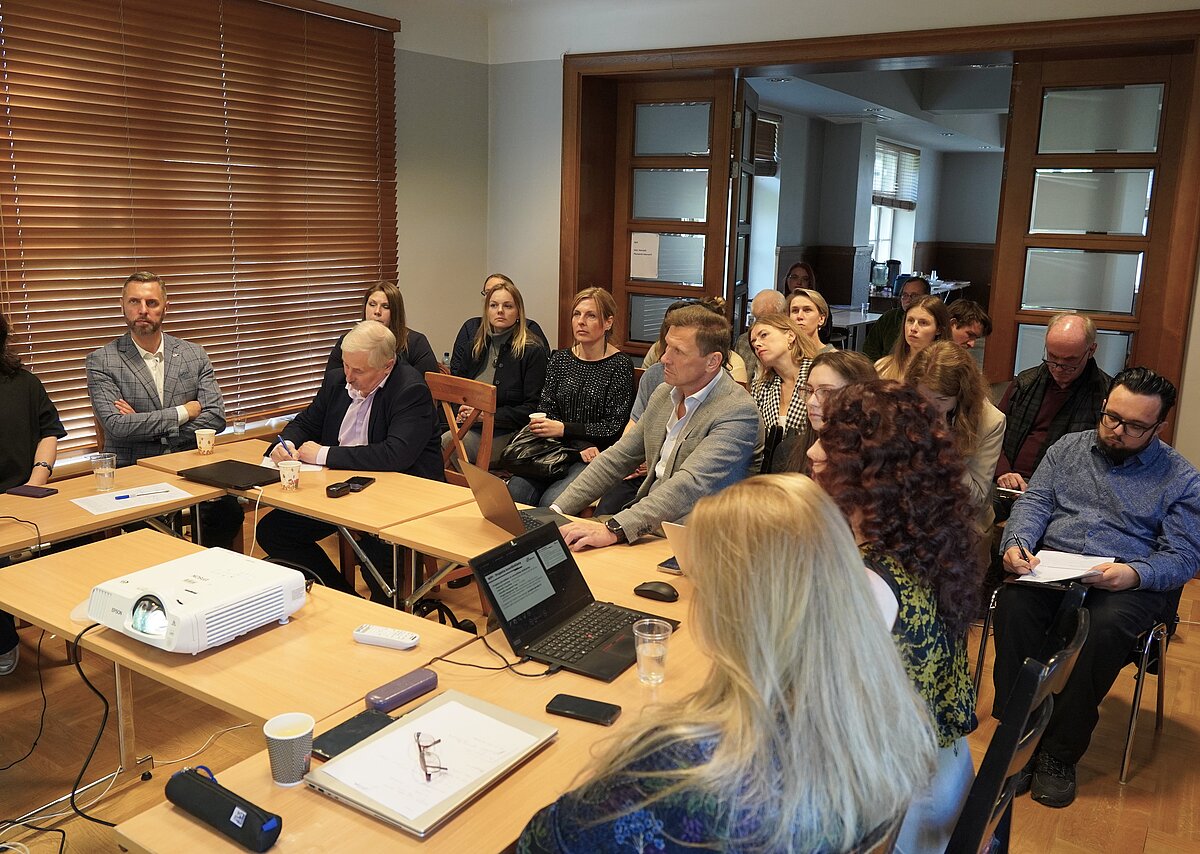
Emphasizing the importance of synergy, Iveta Eniņa, the leading expert of the ICPM projects, mentioned that synergy between research in the field of oncology means creating conditions in which different research projects cooperate and combine their resources, knowledge, and results to achieve common goals. This type of cooperation can create a greater positive impact than each research project could achieve individually. “Synergy can occur when research focusing on different aspects, such as cancer prevention, early diagnosis, and treatment methods, collaborates by exchanging data and best practices. Such an approach helps improve research efficiency, accelerates the innovation process, and in the long term promotes a comprehensive approach to cancer treatment. This approach stimulates resource optimization, reduces the time required for research, saves money, and research results are more reliable because they are checked from different aspects,” said I. Eniņa.
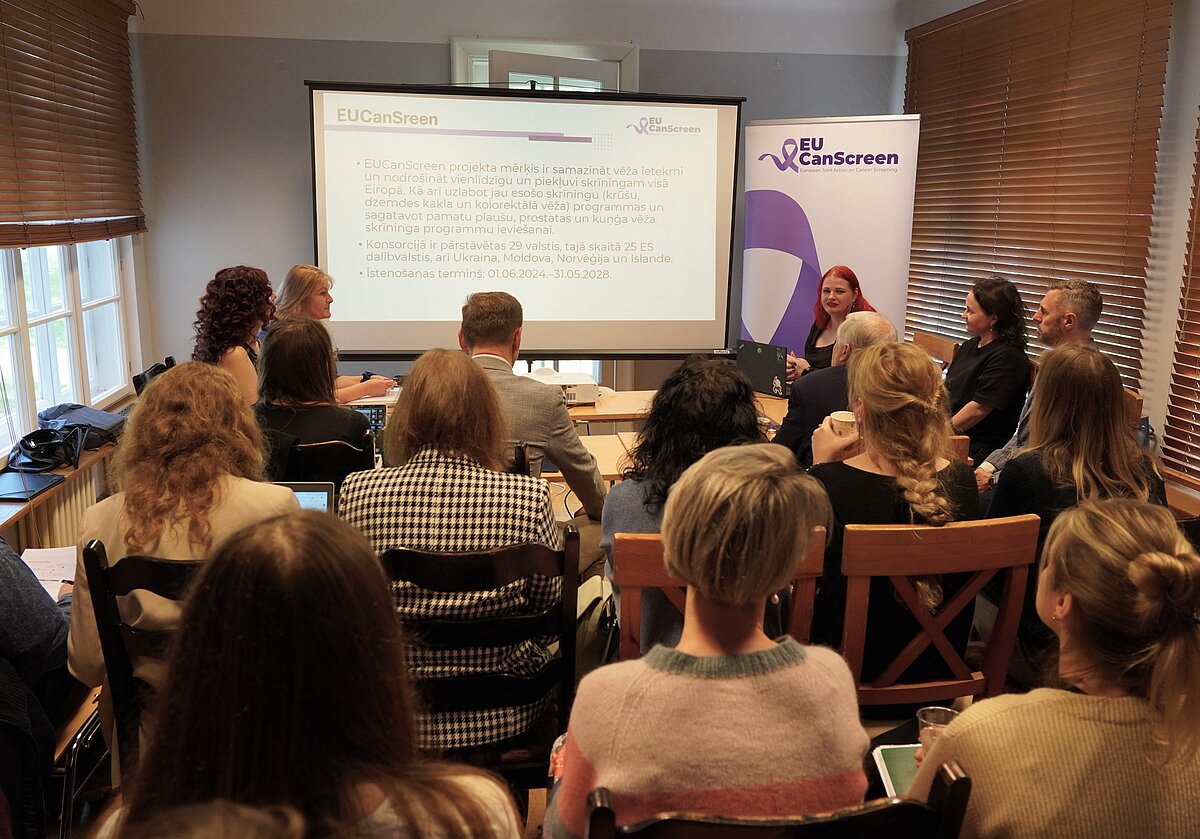
The “Implementation of Cancer Screening Programmes (EUCanScreen)” project aims to reduce the impact of cancer and ensure equal access to screening across Europe, as well as to improve existing screening programmes (breast, cervical, and colorectal cancer) and prepare the basis for the implementation of lung, prostate, and stomach cancer screening programmes. Currently, active work is underway to adopt screening indicators from the TOGAS/SOLACE/PRAISE-EU studies and create scripts for their calculation from individual-level data. A platform is also being created to calculate aggregated data from local screening data to be submitted to a centralized monitoring system.
This large-scale project involves 29 countries, including EU Member States, as well as Ukraine, Moldova, Norway, and Iceland. The project implementation period is from June 1, 2024, to May 31, 2028. EUCanScreen Scientific Coordinator Professor Mārcis Leja emphasized that screening is one of the most powerful tools in the fight against cancer, and it can only be truly effective if it is complemented by accurate and targeted communication with the population.
During the meeting, participants discussed the need for more efficient data exchange and better organizational management. Within this context, the EU project EUCanScreen has introduced opportunities to implement new screening approaches in cooperation with the TOGAS project. TOGAS aims to develop proposals for the introduction of gastric cancer screening by conducting large-scale studies to improve early diagnostic strategies in all EU countries. As there is currently no effective gastric cancer screening strategy in Europe, the TOGAS (Towards Gastric Cancer Screening Implementation in the European Union) project aims to develop guidelines on how to reduce the burden of gastric cancer by eradicating the H. pylori bacteria, which is expected to reduce gastric cancer mortality by approximately 40%. Therefore, one of the most important tasks is early diagnosis and monitoring of pre-cancerous conditions. The main objective of the TOGAS project is to provide evidence-based knowledge for the appropriate implementation of gastric cancer screening in the EU. This project runs from March 2023 to June 30, 2026. The data for this project will be sourced from the GISTAR project led by the ICPM, which started in 2013 and will be completed in 2026. As part of this study, data has already been obtained from approximately 11,000 Latvian residents.
In working on medical ethics norms, cooperation with the EUROHELICAN project, which aims to evaluate population-based Helicobacter pylori testing strategies, also plays an important role. Despite the project's success, it is necessary to address potential negative consequences in its implementation. Another important project, JANE-2, focuses on improving the quality of life of cancer patients by developing new mutually coordinated expert networks that facilitate the flow of information between expert groups. As noted by the project coordinator in Latvia, researcher Dina Bēma, this project will provide access to expert networks across Europe, which is particularly important in cases of complex oncological diseases, as well as access to data, to help improve the competence of specialists in the treatment of oncological diseases.
Additionally, the ECHoS project is working on the establishment of national cancer mission centres, while CCI4EU is strengthening the infrastructure for comprehensive cancer centres in Europe. Future perspectives include the use of artificial intelligence (AI) in cancer screening, which would allow for more effective detection of the early stages of the disease and better assessment of the risk level in patients. The AIDA project is developing a large European H. pylori registry, which will help combine data and improve patient treatment, utilizing new AI solutions for image analysis. The synergy between different research areas in the field of oncology forms a strong basis for an innovative,
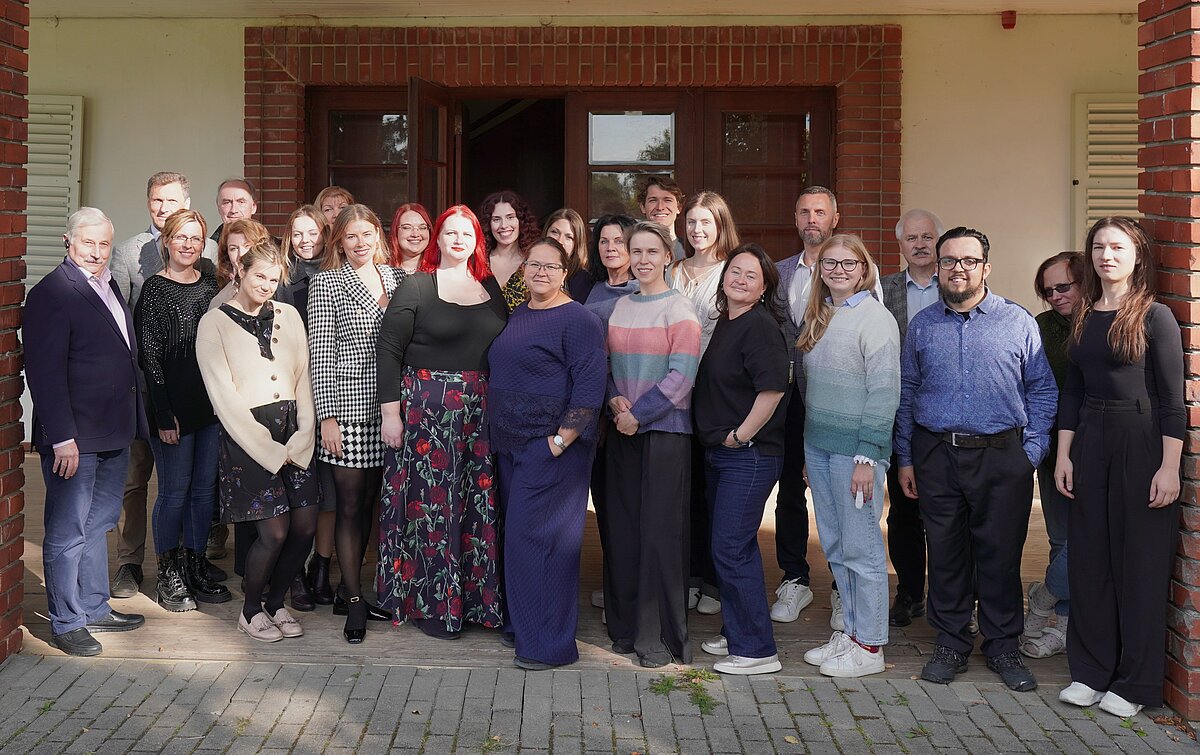
 of the Faculty of Medicine and Life Sciences of the University of Latvia, where participants from various ICPM projects came together to share their experiences and exchange their vision on how to promote the positive impact of projects through mutual cooperation in the long term.)