
 LU konference

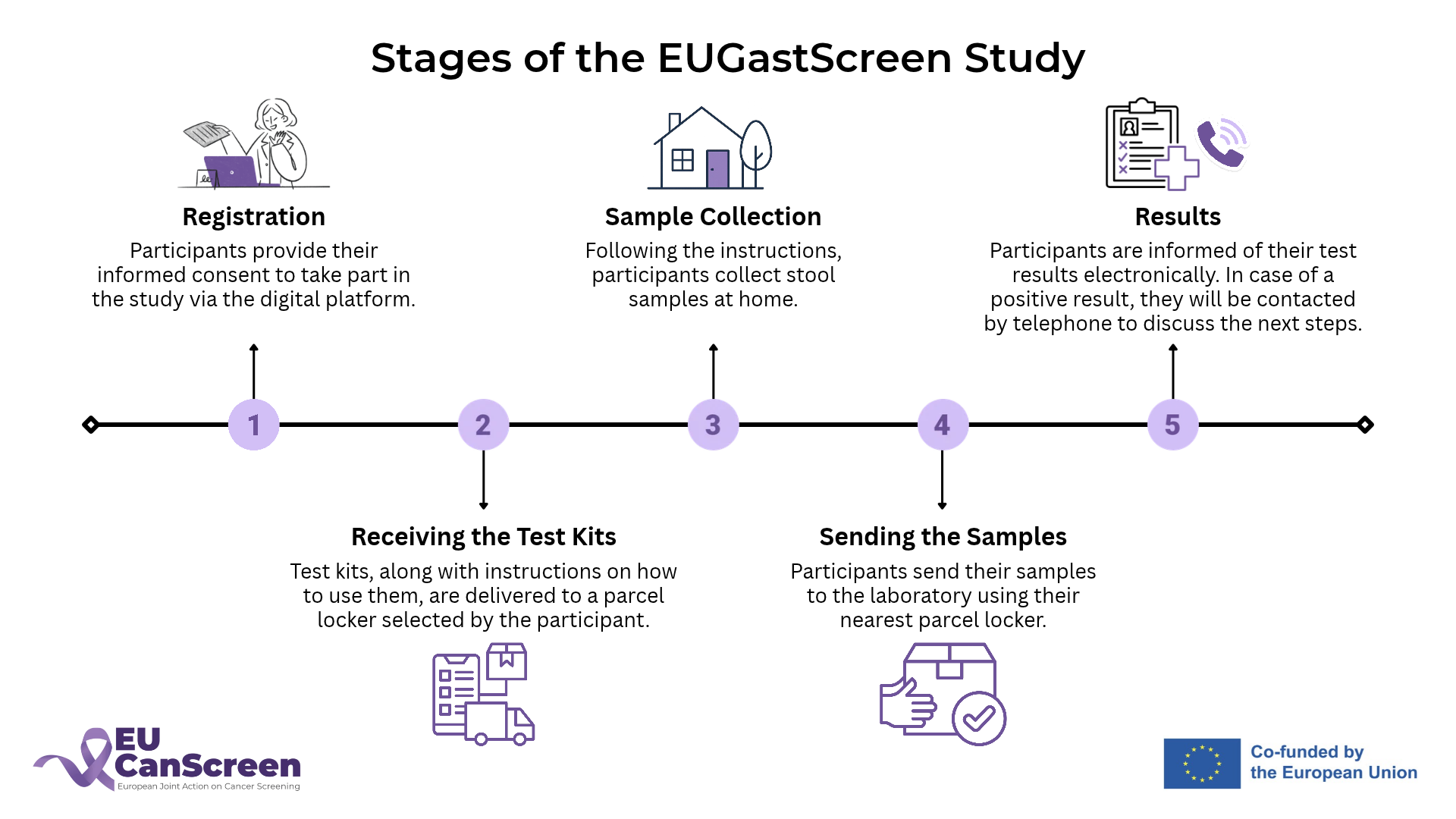
Selected Latvian residents aged 50 are being invited to participate in the pilot study, with invitations sent by post to their registered home addresses. Participants will be offered two tests to complete at home: a faecal immunochemical test (FIT), which is already used in colorectal cancer screening to detect hidden blood in stool, and an H. pylori stool antigen test to detect infection with H. pylori, a significant risk factor for gastric cancer.
Depending on their test results, participants will be offered further investigations or treatment free of charge, where necessary. General practitioners will be informed electronically of their patients' participation in the study.
The study is being conducted by the Institute of Clinical and Preventive Medicine at the Faculty of Medicine and Life Sciences, University of Latvia. It will also be carried out in Lithuania, Estonia, Italy and Portugal.
Why is this study needed?
Latvia has the highest incidence of gastric cancer among European Union countries. One of the most significant risk factors for gastric cancer is infection with the H. pylori bacterium. According to data from the GISTAR study conducted in Latvia, approximately half of the country's adult population is infected with H. pylori. Early detection and treatment of this infection can help reduce the risk of developing gastric cancer.
The pilot study aims to determine whether H. pylori testing and treatment can be effectively integrated into the existing national colorectal cancer screening programme, thereby supporting the prevention of both cancers. The findings will help improve cancer prevention and early detection strategies in Latvia as well as other European countries.
The study is being implemented as part of the European Union co-funded Joint Action on the Implementation of Cancer Screening Programmes (EUCanScreen). It has received the necessary approvals from the Centre for Disease Prevention and Control and the Research Ethics Committee, and is supported by the Ministry of Health.
For any questions, please contact the pilot study team:
- Email: apsteidzvezi@lu.lv
- Phone number: 25153015


Co-funded by the European Union. Views and opinions expressed are however those of the author(s) only and do not necessarily reflect those of the European Union or HADEA. Neither the European Union nor the granting authority can be held responsible for them.
