
 LU konference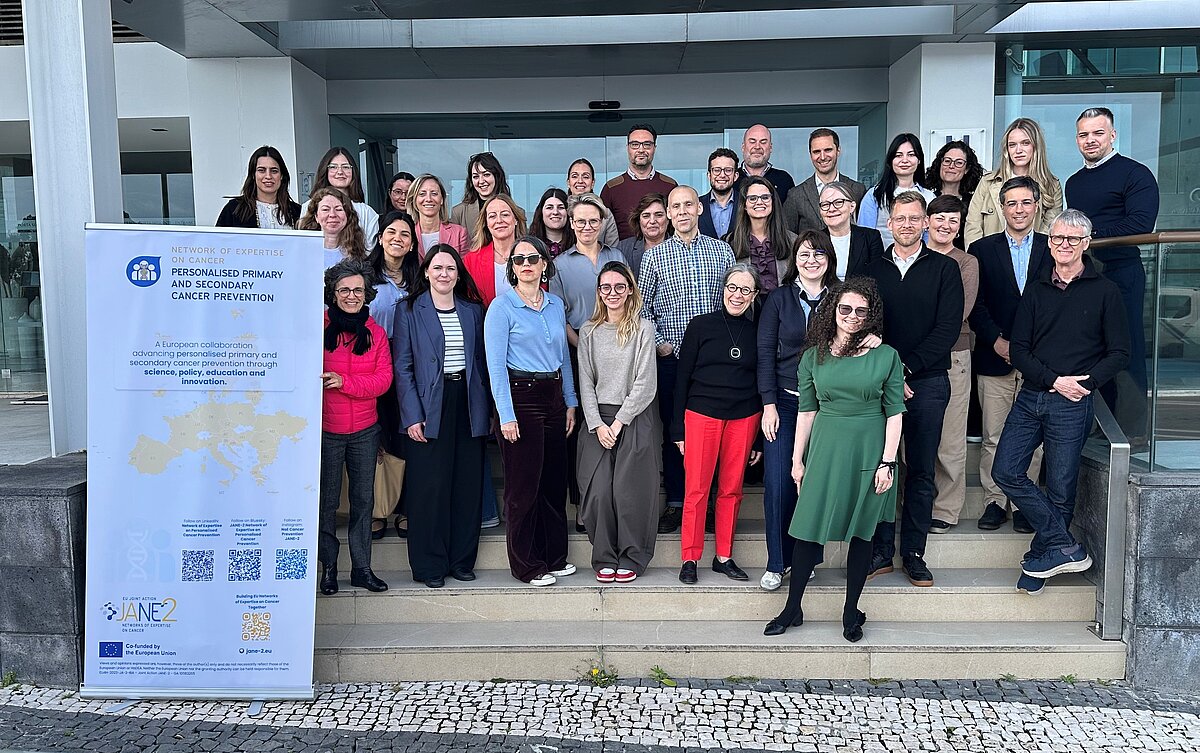
The event brought together experts from across Europe to discuss the most pressing issues in oncology prevention. Dina Bēma, a researcher from the University of Latvia, which is a partner in the project, represented the university.
On the first day, May 11, working sessions were held to address all WP8 tasks—ranging from education, health policy, and lifestyle aspects to the assessment of genetic and epigenetic risks, mapping omics initiatives, and disseminating results. Special attention was given to governance issues, sustainability, and international collaboration between JANE-2 and other cancer-related projects, including EUNetCCC (European Comprehensive Cancer Centre Network).
One of WP8's tasks is to identify and systematize personalized cancer prevention options through a comprehensive analysis of scientific literature and expert interviews. This will aid in prioritizing and developing evidence-based guidelines. Simultaneously, efforts are underway to assess how personalized cancer prevention is being utilized in Europe—what countries, what programs, and with what results are in place—and to evaluate their clinical utility. This will enable member states to learn from one another and implement best practices.
Currently, several European Union cancer initiatives are active, including the establishment of the European Comprehensive Cancer Centre Network within the EUNetCCC project, which also involves the University of Latvia. “It is essential to foster collaboration among these projects for various reasons. For instance, to avoid overlapping work by specialists, ensure the efficient use of resources, align priorities in personalized cancer prevention, and create a strategy that helps maintain the network's sustainability even after funding ends,” emphasizes D. Bēma.
On the second day, participants visited the Hospital Divino Espírito Santo and the Primary Care Center on São Miguel Island, as well as participated in a discussion panel on patient involvement in personalized cancer prevention policy. This included representatives from European, national, and regional cancer patient organizations, as well as leading specialists from the Portuguese healthcare system.
The project “Establishment of a Cancer Expertise Network” has received funding from the European Union (Health and Digital Executive Agency) under the EU4Health program, according to grant agreement No. 101183265.
 took place in the Azores, focusing on the establishment of a network for expert knowledge in personalized cancer prevention.)