
 CONFERENCE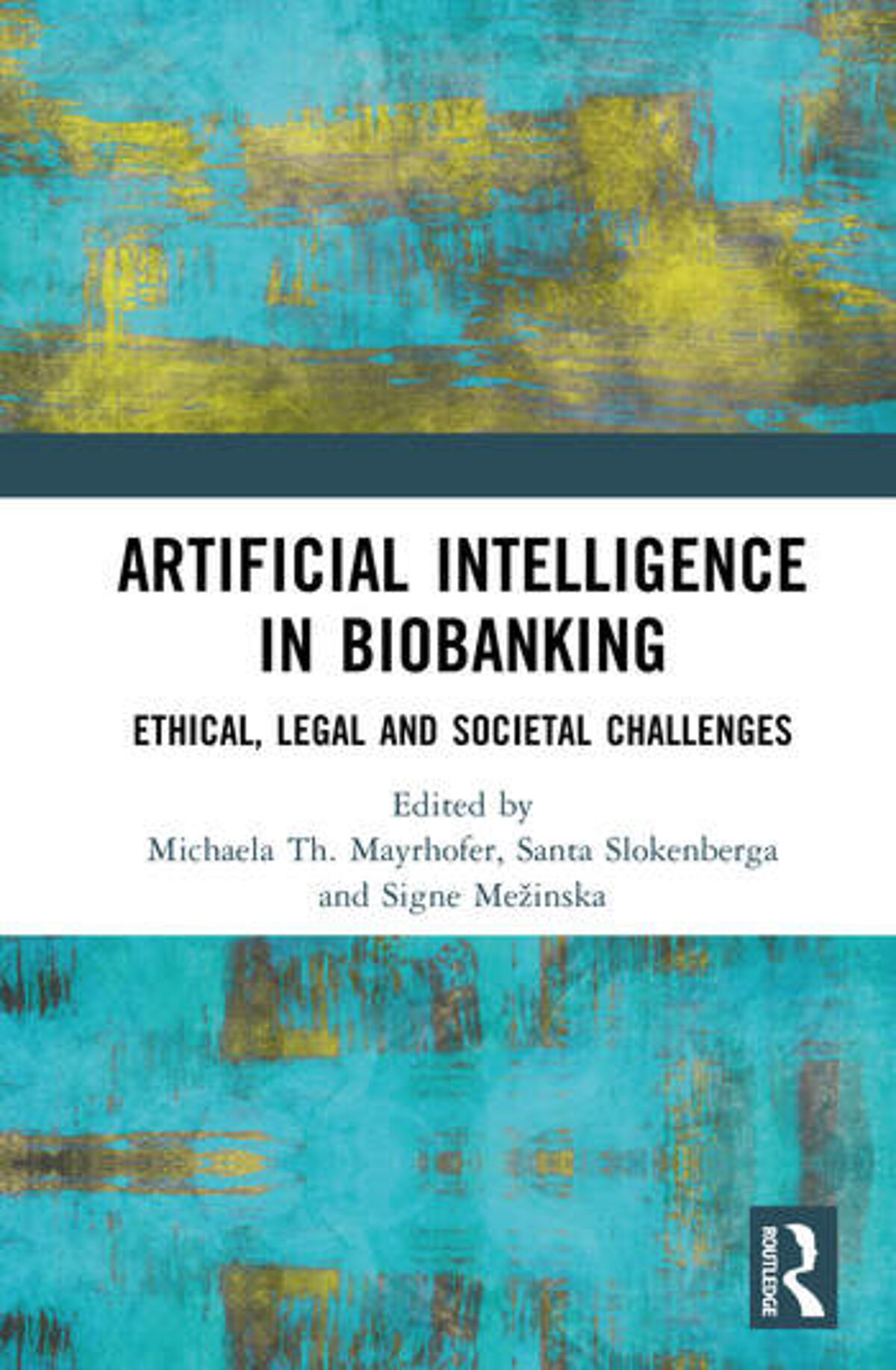
The publication, also available in open access, compiles interdisciplinary research on the ethical, legal, and social consequences of using artificial intelligence in biobanking and biobanking research.
Signe Mežinska is not only one of the editors of the book but also the author of the chapter "Biobanking Research Using Artificial Intelligence Methods: Challenges for Research Ethics Committees." It examines how the assessment of ethical aspects of research can adapt to the complexity created by the use of artificial intelligence in biobanking research. While AI has the potential to accelerate medical research, the book addresses many of the issues that this technology raises: from building trust to preventing harm to individuals, vulnerable groups, or entire populations. Striking a balance between scientific progress and the protection of individual rights and covering important issues such as accountability, data protection, and transparency, the book examines the legal framework for biobanks and the new aspects of biobank governance needed to oversee such a vital resource in this changing technological era.
Editors of the book: Michaela T. Mayrhofer is a political scientist, historian, and sociologist specializing in life science governance. She is the founder of Papillon Pathways e.U. and the Head of ELSI at the Institute of Human Genetics, Medical University of Innsbruck, Austria. Michaela T. Mayrhofer has been the Head of Services and Research (2019–2025) and the Interim Director General (2020) of BBMRI-ERIC ELSI in Austria. She is a reviewer for the journal Frontiers in Digital Health, as well as an independent ethics consultant for several consortia and organizations, and an expert on research ethics for the European Commission.
Santa Slokenberg is an Associate Professor of Medical Law and a Senior Lecturer in Administrative Law at the Faculty of Law, Uppsala University, Sweden. He is a board member of the Nordic Permed Law Network and the European Health Law Association, as well as an independent ethics consultant for several consortia and organizations. Signe Mežinska is a bioethicist and sociologist specializing in biomedical research ethics and medical ethics. She leads a research group at the University of Latvia, focusing on ethical challenges in the development and application of biotechnology, as well as the protection of the rights of patients and research participants. She has worked as an ethics expert in international organizations, including the UNESCO International Bioethics Committee, the WHO, and the European Commission.
The collection has already received critical acclaim. "It offers a fresh approach to the complex issues surrounding the use of artificial intelligence in biobanking. I highly recommend this book for its wide-ranging and high-quality contributions, as well as the expertise of the authors. The authors are leaders in their field and offer insights that are useful not only for biobanking but also for other areas of biomedical research. The book provides a clear, innovative, and analytical presentation of these issues that no other book has provided before," says Jane Kay, Professor of Health, Law, and Policy and Director of the Centre for Health Law and New Technologies at the University of Oxford's Faculty of Law, as well as Academic Chair of Artificial Intelligence and Research at the University of Melbourne. "Artificial intelligence is the Wild West right now, so books like 'Artificial Intelligence in Biobanking: Ethical, Legal and Societal Challenges' are essential for understanding how to develop and implement new technologies responsibly, legally, ethically, and socially. The authors address a number of important questions related to the use of artificial intelligence in biobanking, emphasizing the importance of not viewing artificial intelligence as a mysterious black box that we cannot shape in a democratic and responsible way," writes Sven Nyholm, Professor of the Ethics of Artificial Intelligence at Ludwig Maximilians University in Munich, Germany.
Routledge is the world's leading publisher of academic books, journals, and online resources in the humanities, social sciences, and STEM. The company was founded in 1836 and has published the works of many prominent thinkers and scholars of the last hundred years, including Adorno, Einstein, Russell, Popper, Wittgenstein, Jung, Marcuse, Sartre, and others.
