
 CONFERENCE
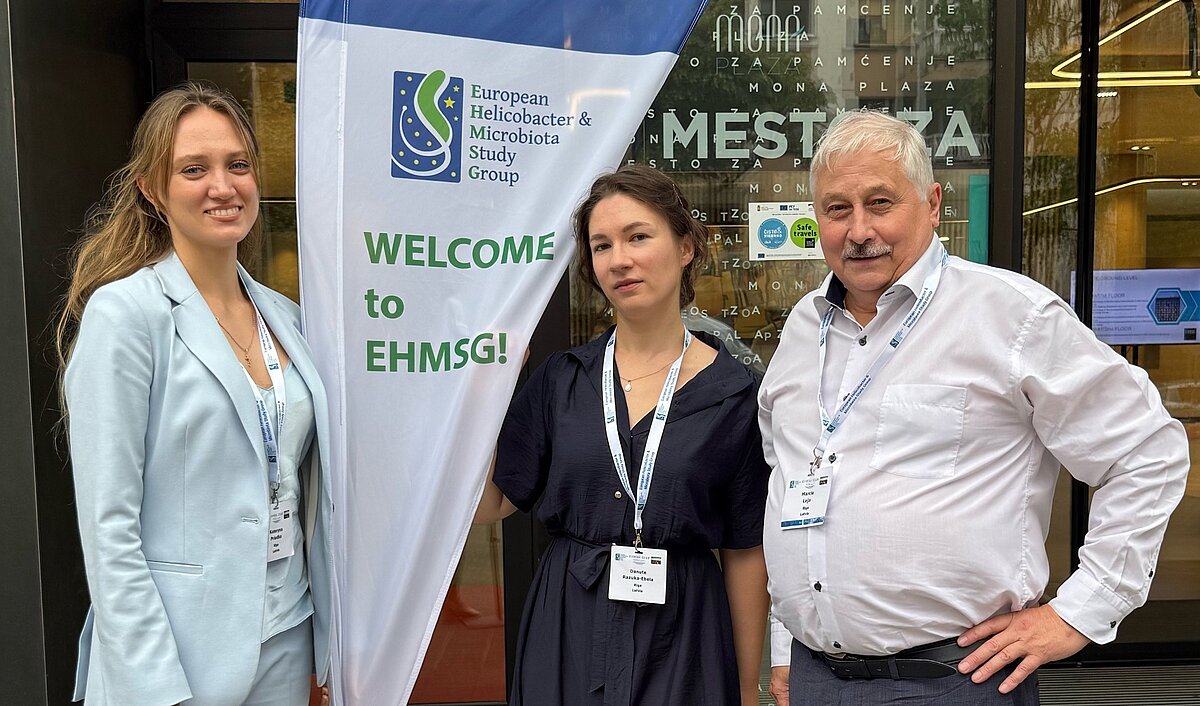
This September, the 39th annual conference of the European Helicobacter and Microbiota Study Group brought together leading experts to discuss the latest advances in understanding the impact of Helicobacter pylori and the microbiota on health.
During a session dedicated to Helicobacter pylori screening, Professor Marcis Leja presented European gastric cancer prevention initiatives, including EUCanScreen – a European Union co-funded project coordinated by the University of Latvia.
Danute Razuka-Ebela presented a poster titled “Investigating predictors of Helicobacter pylori eradication failure in a Latvian population-based screening cohort”. Based on an analysis of data from the GISTAR, EUROHELICAN and TOGAS projects, the study found that people with diabetes were significantly more likely to experience unsuccessful Helicobacter pylori eradication following standard antibiotic therapy.
Kateryna Priadko presented a poster entitled “EUGastScreen: a European implementation study on simultaneous screening for gastric and colorectal cancers”, introducing the study design of the project, which will be launched this autumn in Latvia and three other European countries under the leadership of the LU.
The insights gained at the conference and the research findings presented there will also contribute to practical work. This autumn, the EUGastScreen study will be launched in Latvia, continuing the University of Latvia’s work on the development and evaluation of new approaches to gastric cancer prevention and screening.


Co-funded by the European Union. Views and opinions expressed are however those of the author(s) only and do not necessarily reflect those of the European Union or HADEA. Neither the European Union nor the granting authority can be held responsible for them.
, researcher Associate Professor Danute Razuka-Ebela, and Kateryna Priadko participated in the Workshop of the European Helicobacter and Microbiota Study Group (EHMSG) in Belgrade, Serbia.)